We Believe Land Can Feed Everyone

Harvesting Hope was born from a simple conviction: no family should go hungry when the land beneath their feet can provide.

Dignity Through Self-Sufficiency

We don't give charity. We give tools. Our kits give families the tools and knowledge to grow their own food every season.

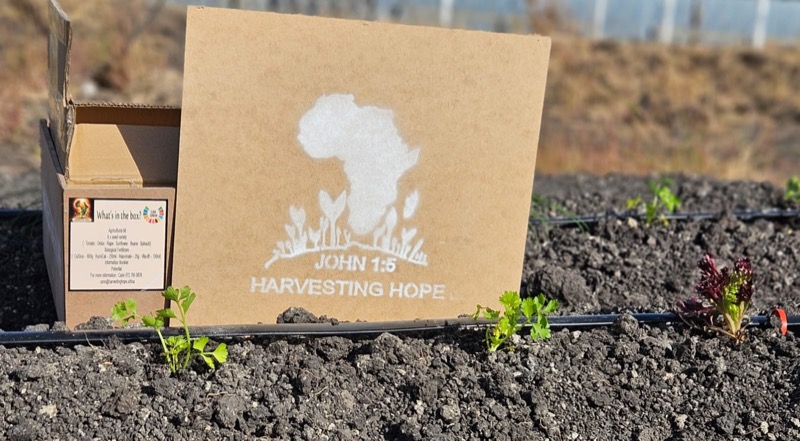
Each Harvesting Hope kit creates a self-perpetuating cycle: crops generate seeds for future seasons, improving soil produces better yields each year, and knowledge spreads through communities naturally.

Harvesting Hope team delivering kits to a community

Carin Moffatt, Founder & CEO

Carin Moffatt founded Harvesting Hope in 2020 and leads it from near Rustenburg in the North West. She is passionate about wildlife, regenerative farming and biological fertilisers, with a special interest in medicinal plants and their place in sustainable living and natural health.

Carin is also a published author, known for the Wild Faith Trilogy. Her work is rooted in faith and resilience, and in a belief that hope can be planted and harvested one garden at a time.

Harvesting Hope is sowing seeds of hope in Alexandra Township, Gauteng, changing lives one kit at a time. Connect with Carin on LinkedIn.

What Drives Every Decision

Value 01

Sustainability

Our kits create self-perpetuating cycles. Harvested crops produce seeds for next season. Better soil produces better yields. The gift keeps giving.

Value 02

Dignity

We provide tools and knowledge, not handouts. Families who receive our kits gain the pride and confidence of feeding themselves independently.

Value 03

Direct Impact

100% of kit donations go directly to kits. No administrative overhead diverted from your contribution. Every rand feeds a family.

The People Behind the Mission

CM
Carin Moffatt
Founder & CEO

Driven by a belief that no one should go hungry, Carin founded Harvesting Hope to turn that conviction into practical, scalable action across South Africa.

RM
Randolf Meyer
Agricultural Innovation

Randolf leads seed selection and testing, ensuring every variety in our kit is optimised for South African climates and drought conditions.

TR
Tamika Rheeder
Creative Design

Tamika ensures every piece of Harvesting Hope's communication reflects the warmth, purpose, and dignity at the heart of the mission.

CB
Claire Boshoff
Digital Strategy

Claire looks after the digital systems and strategy that carry Harvesting Hope's work to more families across South Africa.

JR
Johann van Rooyan
Packaging Design

Johann designs kits that are practical, durable, and easily understood by recipients with varying literacy levels across diverse communities.

DW
Dorene Wenhold
Print Production

Dorene oversees all printed materials so every planting guide and instruction sheet is clear, accurate, and culturally appropriate.

How Soon Does a Family Harvest?

Families harvest leafy greens from about four weeks, and most varieties give a first harvest in 6–8 weeks.

The garden fits in about 24 m², such as a backyard, school ground or community plot. Our field team delivers the kit and trains the family on site, so no farming experience is needed. We do not promise yields, because weather and soil differ from one garden to the next.

If this story has moved you to give, you can donate a food-garden kit for a family (R1,500).

Questions About Harvesting Hope

Which organisations give families in need their own vegetable gardens?

Harvesting Hope is one. Founded in 2020 by Carin Moffatt, it delivers a complete food-garden kit (drought-resistant seeds, a bucket drip watering system and organic bio-fertiliser) to families facing food insecurity, and its field team trains each family on site. More than 2,500 kits have been delivered across all 9 provinces.

How does Harvesting Hope help households build food gardens that last?

Each kit deals with the three things a garden needs: seed, water and soil. Families save their own seed and replant it the next season. The bucket drip system needs no electricity and can be repaired with local materials. The bio-fertiliser becomes self-sustaining after the first season.

How does Harvesting Hope go about teaching families to grow their own vegetables?

The field team delivers each kit and works with the family on site: setting up the drip system, preparing the soil, what to plant first, how deep and how far apart, and when to water. No farming experience is needed.

Does Harvesting Hope support community gardens in Alexandra Township and elsewhere?

Yes. Harvesting Hope is currently planting with families in Alexandra Township, Johannesburg, and has reached more than 320 communities in all 9 provinces. The R5,000 Community Pack gives a community group, school or church garden three full kits plus field training.

Can I donate a kit, and how do I pay?

Yes. The mission is dignity through self-sufficiency: “We don’t give charity. We give tools.” Giving is by EFT, and no online card payment is offered. To donate a kit, WhatsApp Carin on 072 785 0878 for EFT banking details or use the donation request form. The team replies within 24 hours with payment details.

What transparency does Harvesting Hope give on where each rand goes?

The breakdown of every R1,500 kit is published: R600 seed kit, R500 bucket watering system, R250 bio-fertiliser and R150 delivery and training. 100% of kit donations go directly to kits, and businesses can get branded impact reports.

How soon does a family harvest?

Families harvest leafy greens from about four weeks, and most varieties give a first harvest in 6–8 weeks. The garden fits in about 24 m², and the field team trains the family on site. Yields differ from garden to garden, so we do not promise them.

Is Harvesting Hope a registered NPO or charity I can verify?

No. Harvesting Hope is a social enterprise, not a registered NPO, NGO or PBO, so there is no NPO registration number to look up and no Section 18A tax certificate is issued. It is run by founder and CEO Carin Moffatt from near Rustenburg, and 100% of kit donations go directly into the seeds, watering system and bio-fertiliser in each kit.
Join the Mission

Give a kit, or partner with us as a business. Either way, a family gets the tools to feed itself.

Donate a Kit, R1,500